Thursday, November 13, 2025

Frederick Stanley Walton Registers for the Draft.

Fred Walton Circa 1948


Fold3.com, the subscription military genealogy website has recently announced the availability of Korean War era Selective Service Registration records. I immediately signed on and began searching for my Dad, Fred Walton (1930-2021) and wondered what I might discover.


April 6, 1948 dawned cloudy and cool. Rain was expected…April Showers bring May flowers!  Fred Walton opened his eyes and stretched as he woke up to the smell of coffee drifting up from the kitchen and the sounds of his mother making breakfast. Dad once told me that his mother made him bacon and eggs for breakfast every day. But today wasn't an ordinary day. Today was the day Fred Walton turned 18. 


Dad and I never talked about this day or what it might have meant to him. In my generation, in the 1970s, turning 18 meant several things. Although still in high School, I was working part time and felt like I was finally a “grown-up”, whatever that meant. I was also legally allowed to drink alcohol and, maybe, I had a celebratory glass of wine with my birthday dinner. I was still a kid, living at home, and drinking was not really something we did. Up until a few years before, it traditionally meant it was time to register for the draft. In 1976, when I turned 18, the registration for the draft had been suspended, and the Selective Service System entered a "deep standby" status, meaning it was not actively registering individuals for military service. This suspension lasted until 1980 when registration was resumed for men born on or after January 1, 1960.1 As a young teenager, I  dreaded turning 18 and being sent off to a death sentence in the jungles of Vietnam. And yet I spent many waking hours digging foxholes and playing soldier in with my friends in our neighborhood. It was a time of confusion and turmoil in our society. I must say that when the military draft in the United States officially ended in January 1973, transitioning to an all-volunteer military force, I was relieved. So turning 18 in 1976…no draft to worry about…drinking allowed, but not attempted, homework due and tests to take, looking forward to graduation and getting on with life and,  the biggie that year, …The Bicentennial. I convinced crew cut Fred, my Dad,to let me grow my hair long. I really just wanted to fit in with my long haired friends, but pleaded that it was “patriotic” since I was slated to portray a minuteman for several Bicentennial affairs. Looking back, I’m sure Dad wasn’t dumb enough to buy this, but he was cool enough to let me grow up and make some of my own decisions and in 1976 long hair was a big one!


I wondered what it was like to turn 18 in 1948? Dad was an Eagle scout and proudly carried Old Glory in the memorial day parade. He was also a sea scout. I would say, in general, he was a pretty patriotic guy. Looking at the newspapers of the time, there seemed to be a lot of articles about servicemen. Enlisting, promotions, serving overseas, returning home. Compared to 1976, when the military was only mentioned in a negative way, I would guess the country, returning to prosperity after the sacrifices of WWII was still in a patriotic mood. 


Fred carries "old Glory" during the 1944 Memorial Day Parade


As it turned out, Dad and I shared many things in common on our 18th Birthday, separated by only 13 calendar days… and 28 years. In 1948 The minimum drinking age was 182, there was no draft, it concluded in 1947,  and like me he probably had homework due, had tests still to take, and looked forward to graduation and getting on with life. His yearbook “Last Will and testament” said: “I, Fred Walton, leave “kitten” to no one- not even Edgar”. Edgar was his brother, but the identity of Kitten will remain a mystery. His yearbook motto was very pragmatic: "The present hour is in my power, and so I will enjoy it”3. I’m sure, like all teenagers, he was ready to start the next phase of his adult life.


Fred Walton 1948 Yearbook Photo


Although there was no draft on April 6, 1948, a front page article in the April 5, 1948, predicted a revival of the draft to halt Russia, who was “making moves fast”.4


On Friday, June 25, 1948, the day before Fred’s graduation. president Truman signed the peacetime draft bill known as the selective service act of 1948. In short, this bill required all men aged 18 through 25 to register for the selective service. This surely had to be a topic of discussion amongst the graduates. Only men aged 19 through 25 would be inducted, but even so, this could be a big change in the plans of the graduating seniors. It was expected to take 6 weeks or more for the Draft Boards to be set up and the “Selective Service machinery to be meshed into gear”, but it was estimated that the draft pool could impact 3 million eligible men.5


The Selective Service Act of 1948, also known as the Elston Act, established the current Selective Service System in the United States, requiring male citizens and certain residents to register for potential military conscription. Initially intended to last two years, it has been extended multiple times and was a response to the need for military personnel during the Cold War era.


On July 20, 1948 President Truman issued a proclamation calling for Draft registration to begin on August 30 for men born on after August 30, 1922, followed by each birth year on subsequent dates. Those born in 1930 would be required to register September 17 and 18, 19486


The "Mount Vernon, Argus,” for Friday, September 17, 1948, had a small front page story entitled “Draft centers end registry tomorrow" reminding readers that local board number 10 will close at noon tomorrow, Saturday, September 18, and stating after that all youths, as they become eighteen,  will have five days to travel from their homes to Mount Vernon to register.


Fred reported promptly on Thursday, September 16, 1948 to local board number 10, 308 Lincoln building, 100 Stephens Ave., Mount Vernon, New York. This was one day before he was required to report. Mount Vernon was less than 10 miles south from Ardsley. Was it patriotic duty that caused him to register early or the only time he could get off work? Unlike me, Dad rarely procrastinated, so this might simply be his solid work ethic of getting stuff done.


What can we learn from Fred’s Draft registration7We already  know his name, birth date and place, Frederick Stanley Walton,  Born 6 Apr 1930 in Tarrytown, N. Y., which is confirmed on this form


We learn he is unmarried and lives with parents at 13 Nepperhan Street, Ardsley, N. Y.   


His occupation, just out of high school, is new information. District Manager? At White Plains Reporter Dispatch, a daily newspaper located at Church Street in White Plains, N. Y. I don’t recall Dad ever mentioning that he worked for a paper. His high school credentials make no mention of working for the Student paper or yearbook. Having graduated only a few months before, it is doubtful that he had garnered enough journalism experience to be named a district manager, which would have been titled an editor, anyway, if he was working for the paper as a journalist. My guess is he was  more likely involved with circulation, either with the delivery of papers or possibly an office job in the circulation department. I vaguely recall Dad being a paperboy as a kid and maybe this was the natural career path until he decided what he really wanted to pursue. As an  adult, Dad was always involved in finance and banking, so seeing this occupation was surprising, although short lived, because exactly one year later he listed his occupation as an employee of Scarsdale National Bank8


His description, on the reverse of the draft card, identified the following features: Color of eyes- brown, Color of hair-brown, Complexion- dark. No surprise here. His Height (approx.) 5 ft.  9 in. and his Weight (approx.) 146 lbs, reminded me that he was not really a big guy and I had probably outgrown him in height and weight by the time I reached 18.


Big Rick and Little Fred


The final line of that section, while not really surprising, was revealing. “Other obvious physical characteristics that will aid in identification:” it asked and the  answer: “Scars on right forearm, wrist and hand.” appears to be written by the registrar. There would not have been a doctor’s physical as part of the registration process. That would come later. But was this description enough to knock him out of the running? Or did he eventually report for a physical and get classified 4F? 


The way the process worked was at some point after registration, men were classified by the local draft boards into one of three categories: 1-A (available for military service), 1-A-O (available for military service, but with an exemption for hardship or other reasons), or 4-F (unavailable for military service due to medical or other reasons)9.


When Dad was about eight years old he had an accident that left him with a compound fracture of his right arm that never really healed properly. It was a fairly minor impediment, but he had to learn to primarily use his left arm. His muscles had atrophied and gangrene had set in, causing permanent and visible scaring and damage. By his 18th birthday, Fred would have overcome this weakness to the extent it was barely noticeable.  I am fairly certain that even as well as he managed to downplay this injury, substituting his left hand for eating and writing, he would not have been able to survive in the military where everything is performed from the right hand, which is the most common. Left handed soldiers have to learn to do things with their right hand, thats just the way rifles, drills and equipment work. For Dad, using the weakened right hand was often simply not an option. 


Fred at Beach circa 1964

If you look closely at Fred's right Arm, in the photo above, compared to his left arm, you will see the deformity where the cast was that weakened his arm, deforming forearm and his hand.

Although he was issued a selective Service Number, 30 10 30 365, I have been unable to find any specific military documents that spell out his classification. I do know he did not serve in the military.  


Was Dad willing to serve? We’ll never know. His prompt registration suggests his willingness to step up and do his duty, but his damaged arm would have likely prevented him from being accepted. 


Notes

  1. Historical Timeline of the Selective Service System. https://www.sss.gov/history-and-records/timeline/, accessed 11/12/2025
  2. U.S. history of alcohol minimum purchase age by state. https://en.wikipedia.org/wiki/U.S._history_of_alcohol_minimum_purchase_age_by_state, accessed 11/12/2025
  3. U.S., School Yearbooks, 1880-2012"; School Name: Ardsley High School; Year: 1948. accessed 11/12/2025 via Ancestry.com
  4. Quick Draft Passage Predicted, Mount Vernon Argus, White Plains, New York, Mon, Apr 5, 1948, Page 1
  5. “Speedy Action seen in Draft”. The Journal News, White Plains, New York, Fri, Jun 25, 1948, Page 1
  6. “Truman orders Registration for Draft to Begin Aug. 30”, Mount Vernon Argus, White Plains, New York, Tuesday, July 20, 1948, Page 1
  7. Fold3.com, US, Korean War Era Draft Registration Cards, 1948-195
  8. The Reporter Dispatch, White Plains, New York, Fri, Sep 16, 1949, Page 8, “Olive Broestler To Be Bride of Fred Walton Jr.“, accessed 11/12/2025
  9. https://www.civil-war.net/how-did-the-korean-war-draft-work/, accessed 11/12/2025


Wednesday, June 25, 2025

"That's going on your PERMANENT RECORD!"

(C) 2020 Frederick E. Walton, Family Historian

Remember back when you were in school, the terror that struck your heart when your teacher said "do you want that on your permanent record?" That was generally enough of a threat to stop you from doing whatever it was you were not supposed to be doing. But now, many years later, you might wonder whatever became of your "permanent record". I'm not positive about your record or even my own, but I recently discovered that my grandfather's "permanent record" was lying in the dusty archives of the Tarrytown, New York school system and I was able to obtain a copy of his high school report cards. 

It was interesting to see his scholastic record, however my real goal was simply to determine the years he attended high school, primarily to understand and document his achievement as a championship varsity player on the Washington Irving High school basketball team in the mid 1920's.

Fred Walton was born on December 17, 1908, the youngest and 12th child of George Walton (44) and his wife Constance Wilhelmina Walton nee Long (39). He was born and grew up in Tarrytown. His father died unexpectantly in 1910, but Freddie grew up in a household that his widowed mother held together, somehow, and he had the support of his older brothers and sisters, many of them accomplished athletes in their own right, eager to share their knowledge with their younger sibling.  By the time Fred was in High School, his sister Connie had made a name for herself as a nationally recognized track star, as well as a touring woman's basketball and baseball headliner.

As a child born in December, the question becomes: when did Fred start school? He would have been four years old in September 1913, when school began that year. Did he start then, as perhaps the youngest student, knowing he would turn five before the end of the year? Or did he wait a year until 1914 and start school at age five, perhaps the oldest student, because he would turn six on December 17. More importantly, would his mother want her "baby" to stay home with her or was she so busy making ends meet that she welcomed the chance to send him forth into the world? 

Contance with her two "babies"

One source I consulted was the U. S. Federal Census, however the 1920 census only tells us that 11 year old Fred was in school, but not what grade. Constance Wilhelmina, 50 and a widow, lists her occupation as "none" although being a mother to a large family was certainly a full time job! Still living in the household are: Constance, age 18, a Stenographer for Erie Railroad; Frank, 17 a plumbers apprentice; Lillian, 15, a student and Jack, 13, also in school. The older siblings where off starting families of their own, but I believe some of them were still sending money home to help the family.    

When I started reviewing the many newspaper articles praising "little Freddie Walton's" basketball prowess in the mid 1920's It was not clear which class he was in, although it seems he was a varsity player early in his career. I thought the former Washington Irving School system my have some records to share that would clarify this and contacted them for help.

Washington Irving High School, Tarrytown New York (Broadway and Franklin)

Report Cards 

The Tarrytown school district sent me three sets of report cards for the years 1924-1925, 1925-1926 and 1926-1927 which equate to grades 9, 10, and 11. 

In September 1924 Freddie Walton, age 15, entered the 9th grade. He was probably one of the older students and would have been 16 years old on Dec 17, 1924. This answers the question of when he stared school. He would have started in September of 1914 when he was five, turning six in December. 

Fred excelled in "Wood turning" and "Physical Training" (i.e. Shop and Gym). It was well know that Fred was a superb athlete and was rumoured to have been scouted for a pro baseball team in the late 1920's. 

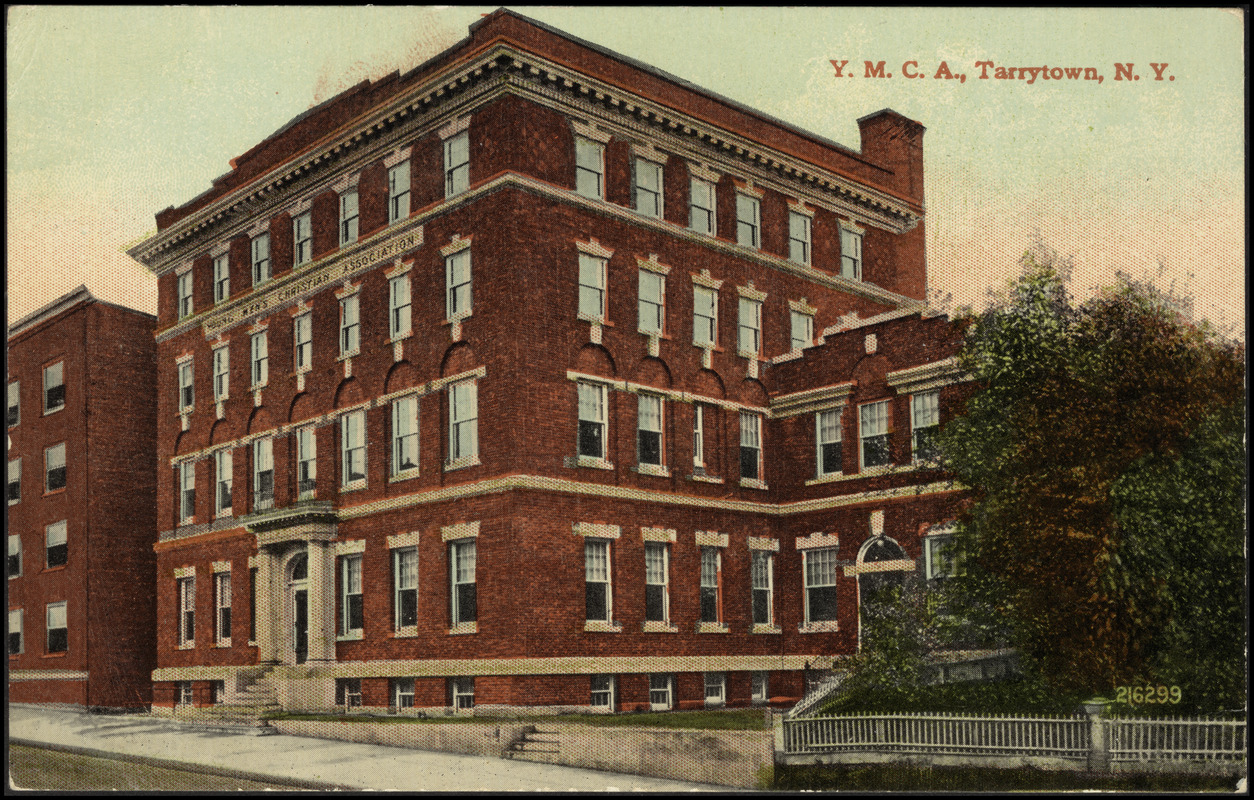
He was also active on Y. M. C. A. teams. In the first month of 1924, 15 year old 8th grader, Freddie Walton won the Y. M. C. A Bowling Champiomship, Bowling a record breaking 210 in a single game.

Tarrytown Daily News, 9 January 1924

Now playing for the Washington Irving team, young Freddie Walton was an aggressive and talented Basketball player who was small, fast and well liked by the fans. He frequently scored about a third or more of his high school teams total points and often in a crowd wowing style. He was a risk taker and in one game his chancy midcourt throw scored the winning point as the final whistle blew. He was well known for his skill on the YMCA "Midget" team, and as a Freshmen, he was already playing Varsity ball!

As the 1924/25 basketball season was winding down, star forward Freddie was ready to try out for the Baseball team and is listed among the "nines" playing for the high school that season.

However the rest of his grades were not so hot! He also had a high absentee record, missing about 5 days per month. The courses he was enrolled in included: Algebra (which he failed and was dropped back to 8th grade algebra), Biology, Civics, Reading and Writing and English. His grades hovered around failing.

I am sure that his high absence affected his grades, but it is not clear what caused the absence. My best guess was that he was working part time. According to Fred's son, my father, Fred worked at the YMCA and also played sports on the "Y" teams. His employment at the "Y" helped pay for his membership and probably provided a little extra money to bring home to help a struggling family.

Besides grades and attendance, the report card also listes the home address Fred lived at in 1924:  62 John Street, in Tarrytown, only a block from the new high school.

10th Grade

In 1925-1926 Freddie Walton, Age 16, was advanced to 10th grade despite his poor academic showing. The is a vary faint pencil notation on this report card that says "10th grade" to substantiate this conclusion. It is unknown how much his athletic contributions to a winning team may have helped him advance to the next grade.

Freddie again excelled in "Physical Training" (i.e.  Gym) and his shop class, labled "sheet metal", but continued to have a high absentee record rising to 12-30 days per month. This, again, suggests he held a part time or perhaps multile part time jobs to help pay his way at home, interupting his school career.  In a 1954 newspaper article, celebrating his 25th year with Con Ed, it was reported that he worked for the Pincus Ice cream store, at 35 Main Street,  and Isaac T. Jones, a tin smith (50 Wildey St.),  and the Chevrolet Motor Company before starting at Westchester Lighting and electric in 1928. Fred's older brothers William and Robert also worked as a Tinsmith and later for Chevrolet. I was unable to determine exactly where he worked and when, but it was most likely during this time period, which would have impacted his studies.

Modern View of Main Street, Tarrytown
showing location of Ice Cream Shop at 35 Main Street
where Freddie worked as a youth

Fred's 10th grade curriculum included: Algebra , Civil Arithmetic, Biology, Civics and English. His grades were failing or a "D", probably attributed to his high absentee rate, and perhaps a lack of interest in the scholastic subjects.

Ironically, the January 7, 1926 issue of the "Tarrytown Daily News" reported on the sports page that: 

"Those who are up in their studies and eligible to play are: Captain Mack, Fred Walton, Fred Couzins, Thomas,  Tanaro, Haggerty, DeRevere, McDowell and Carpenter."

Fred Walton was a consistent high scorer and celebrated star of the basketball team, but they must not have seen his report card!

After a winning season on the hardwoods, winter melted into spring and the boy's thoughts turned to baseball, where Fred could be found in left field. He was again often on the newspaper sports pages being lauded for his standout playing in that position. When school was over, Fred could be found playing the same position for the Y. M. C. A. Hiltons baseball team, again getting his name in the paper on a regular basis.

11th Grade

In September of 1926 Freddie Walton, Age 17, was advanced with his classmates to his Junior year in high school.  Once again Fred excelled in "Wood turning" and "Physical Training" (i.e. Shop and Gym), but miserably failed in  English, Civics and Biology, getting several zero's, probably caused by lack of attendance.

The November 20, 1926 "Tarrytown Daily News" reported the beginning of the W. I. H. S. basketball season and named the players.  All star Fred Walton was not listed among them. It is unknown if his grades finally caught up with him and made him ineligable to play or if he simply had a better offer. During the 1927 basketball season Fred can be found listed on the Tarrytown junior Y. M. C. A. team, the Ramblers, playing exhibition games in New York City and surrounding counties. He is occasionally listed as a sub or fill-in on the Tarrytown "Y" Big Five touring and playing against college and semi-pro teams. Fred was hailed as the star of the team and consistent high scorer in this tougher, semi-pro league.


In February 1927, 18 year old Freddie quit high school for good. It is unknown whether this was his decision or the schools, but that spring he was remembered as a"colorful outfielder" who played baseball for Westchester Light Company, who he eventually joined as an employee in 1928. Westchester Light Company eventually merged with Con Ed where Fred retired many years later.

Although he started his Junior year, he dropped out without completeing it. The 1940 U. S. Federal Census, stated that Fred's highest grade completed was H-2 (10th Grade).

Family oral history recalls Fred relating how all the Walton children worked and pitched in to help the family survive and stay together. None of his eight siblings completed their formal education, but nevertheless grew up as successful hardworking citizens (most of them veterans) who gave their children and grandchildren a stable and respectable platform with which to lauch their own future successes. 

So did many other famous and successful men of earlier generations, including Billioniare John D. Rockefeller,  whose Tarrytown estate bordered the lake where Freddie Walton's future wife's father was superintenant of the village water works. Other notables include author Mark Twain, who struggled with many occupations before being a successful writer and lecturer. Even Henry Ford and Albert Einstein failed to complete their high school education, but went on to brilliant careers.

By 1929, still a well know athlete in many fields, Fred got married. By 1930 he had started a family. Still playing baseball he stayed focused on his job even though the lure of a risky career as a pro ball player beckoned him. He had new family obligations of his own and settled into the roll of husband, father and breadwinner. As the years passed, He kept his athletic abilities sharp in the bowling alley and the golf course and occasionally as a surpisingly "colorful outfielder" at his company's family picnic games. 

Notes:

Jones, Isaac T.; Tarrytown, New York, City Directory, 1918-19, Page 61.

Thursday, March 20, 2025

The Last of our Parent's Generation

 by Frederick Walton- Walton Family Genealogist

The Waltons of Westchester- My Grandfathers Generation


During a recent chat, my cousin and fellow genealogist, Claudia Shuttleworth, and I pondered the question: Of the nine siblings of our grandfather's generation (all deceased) are any of their children, i.e. our parents generation, still living? At the time we discussed this in late 2024, Claudia's mother was still living and we thought that she was perhaps the oldest survivor of her generation. 

If we consider George Walton (1864-1910) to be generation 1, then our grandparent's would be generation 2 and our parent's would be generation 3. Claudia, our many cousins & siblings and myself are generation 4. I know that many of my generation are parents, grandparents and even great-grandparents, stretching George and Constance Walton's legacy to at least 6 generations bearing the Walton DNA! 

 To answer our question regarding the twenty grandchildren in generation 3, our parent's generation, see the breakdown below. 

Sadly, Barbara Walton Simmons, age 96,  passed on March 14, 2025. She was the LAST grandchild of George & Constance Walton. 

Barbara Walton Simmons

George Walton (1864-1910) and Wilhelmina Constance (nee Long) Walton had nine children that survived into adulthood. I took a look at each child and documented their children (the third generation) below.

1. William Edward Walton (1892-1960). Bill was married three times but had only one daughter:

1.1- Gertrude Frances Walton (1920-2008). Gertrude never married and had no children.

2. Robert George Walton (1895-1973). "Bub" married Helen Papp (1900-1978).  They had 4 children, all deceased as of 2014: 

2.1- Dorothy Helen (1920-2012)

2.2- Constance Charlotte (1922-2009) 

2.3- Robert George (1924-2014)  

2.4- Virginia Francis (1929-2007). 

3. Harry Walton (1896-1981): married Sarah Mae Adams (1900-1974). They had four children, all deceased as of 2025: 

3.1- Daisy Mae (1918-2012), 

3.2- Harry A. (1920-1984), 

3.3- Ruth Louise (1923-2011) 

3.4- Barbara Fay (1928-2025).

Barbara is the mother of Claudia Shuttleworth.  Barbara was the last surviving Grandchild of George and Constance Walton. 

4. Charles Walton (1899-1981): "Chum" married Beatrice Geraldine Henderson (1904-1961) They had five children, all deceased as of 2023

 4.1- Mabel Agnes Lewis (1924-2009), 

4.2- Charles Harding (1926-2008), 

4.3- Harold Eugene (1928-2017) 

4.4- Richard Vincent (1930-1999), 

4.5- Beatrice Gambichler (1937-2023)

5. Constance Elizabeth Walton (1901-1982): Connie, a superb athlete in her youth, married Ervin J. McMonagle in 1923.  She had a daughter, Constance Joy McMonagle, who was stillborn on 19 April 1926. Ervin died in 1938. Connie married William H. Maxwell in 1946.

6. Frank "Red" Walton (1902-1988) married Elsie Ernst. They had two Children, both deceased:

6.1 Ruth Walton (1927-1994)

6.2 Frank Arthur Walton (1938-2010)

7.  Lillian Louise (Walton) (1904-1982) married Frank Halpin (1899-1971) and they had one daughter:

7.1 Constance L. Ludwig (1929-2022)

8.  John Walton  (1906-1997) "Jack" never married and had no children

9. Fred Walton (1908-1980) married Gertrude Bell (1911-1989). They had two children, both deceased:

9.1 Frederick Stanley Walton (1930-2021)

9.2 Edgar Owen Walton (1932-2017)

The next question becomes, what is the status of Claudia's and my generation, Generation 4, the baby boomers. Sadly some have already passed and there are many cousins I have never met. It will take some digging to update and verify the records. If you are a family Historian for your branch of the Walton family, I would love to have you share your information with me. After all, it's all a matter of records.